
Fixing Into Brick Walls and Choosing the Right Fixings
Brick is a reliable fixing base, but it still needs the right anchor for the load, the brick type and the application. A light pipe clip, a wall-mounted sign and a heavy gate bracket all place very different demands on the fixing, so the product choice should be made before drilling begins.
Check the Brickwork First
Before choosing a fixing, inspect the wall. Older brick can be soft, brittle or uneven, while newer engineering brick can be very dense. The condition of the brickwork will affect how well the fixing performs. For most medium and heavy-duty jobs, fix into the brick itself rather than the mortar joint. Mortar is more likely to crumble under load and will not provide a consistent hold.
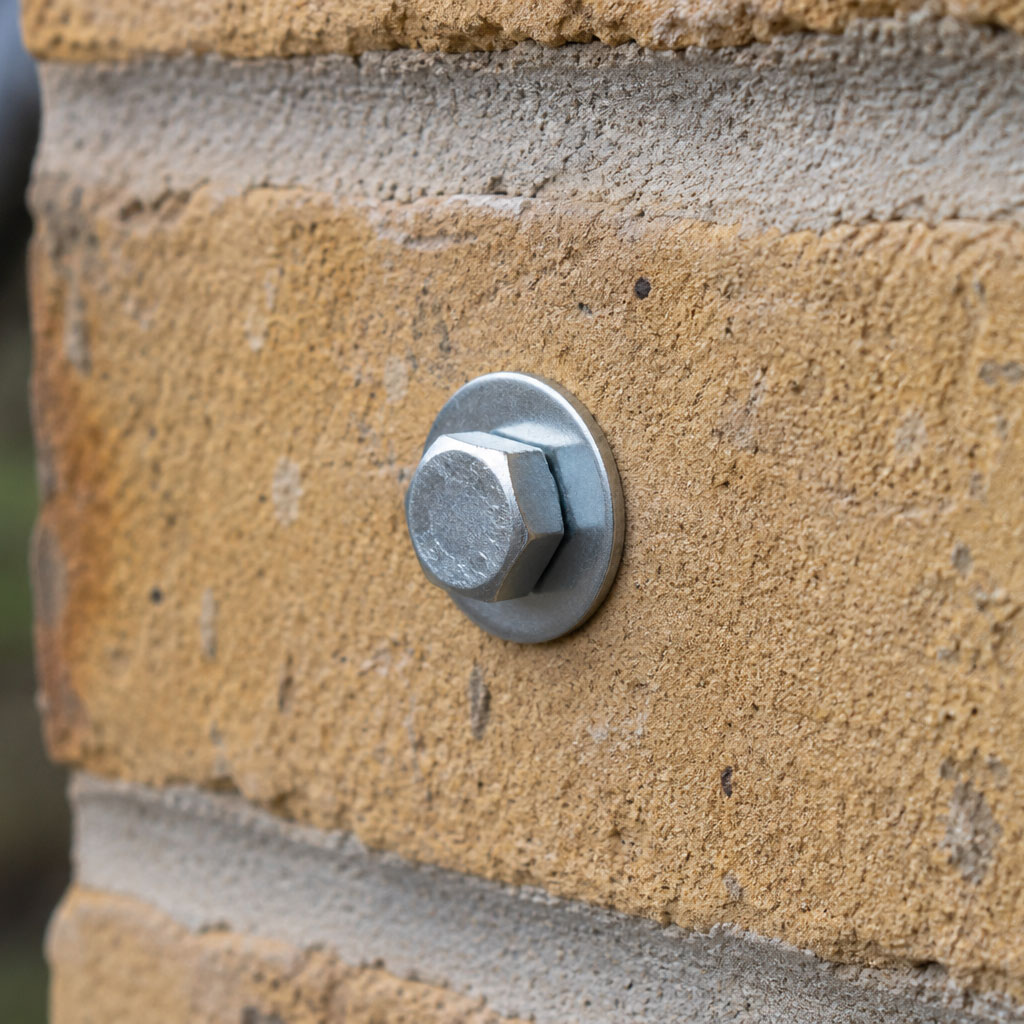
Light-Duty Brick Wall Fixings
For smaller fixtures, a simple plug and screw may be enough, provided the brickwork is sound and the load is low. The best options are:
- Plastic plugs – a practical choice for light indoor fixings into sound brickwork.
- Nylon plugs – a stronger general-purpose option for brick, block and masonry.
- Masonry screws – allow direct fixing into brick or block without a separate plug.
These are best used for lighter items, such as cable clips, small brackets and lightweight signs.
Medium-Duty Masonry Fixings
For shelving, timber battens, rails, outdoor lighting or heavier brackets, step up to a fixing with more holding power. For example:
- Frame fixings – commonly used for securing timber, battens and frames to masonry
- Hammer-In fixings – designed for fast installation of battens, trunking and lighter framing.
- Sleeve anchors – provide a stronger mechanical hold in brick, block and concrete
- Heavy duty anchors– useful where a stronger mechanical hold is needed, suited to high-load brackets, frames and fixtures These fixings generally work by expanding inside the drilled hole, creating mechanical resistance against the surrounding masonry.
Heavy-Duty Brick and Masonry Fixings
For high load applications, such as gate posts, steel brackets, security fixtures or heavy shelving, stronger anchors are usually required, such as:
- Shield anchors – designed for heavier loads in solid brick, concrete and dense block.
- Through bolts – suited to permanent, high-strength fixing into concrete or dense masonry.
- Resin anchors with threaded studs – create a strong, stress-free fixing in concrete and masonry.
Resin anchors are especially valuable where expansion pressure could damage weaker brickwork or where the masonry is less consistent.
Drilling and Installation
Use the correct masonry drill bit and drill to the required depth for the fixing. Once drilled, clear the hole properly before inserting the plug, screw or anchor. Dust left inside the hole can reduce grip, particularly with resin systems and tight-fitting anchors.
A few practical checks before installation:
- Mark fixing points accurately before drilling.
- Use a spirit level for shelves, rails and brackets.
- Start slowly to stop the drill bit wandering.
- Drill deep enough for the fixing to seat correctly.
- Clear dust from the hole before installation.
- Avoid overtightening, especially in older brickwork.
For outdoor applications, use corrosion-resistant fixings wherever possible. Stainless steel, galvanised or exterior-grade fixings help reduce the risk of rust, staining and long-term failure.
Key Takeaway
The right brick wall fixing depends on the load, the condition of the brickwork and whether the job is indoors or outdoors. Light fixtures may only need plugs and screws, while heavier brackets, gates, shelving or security fixings may require sleeve anchors, shield anchors, through bolts or resin anchors.