

Galvanised restraint straps vs stainless steel restraint straps
Restraint straps are designed to reinforce connections between structural elements of a building. This includes connecting timber-joisted floors and concrete beam-and-block floors to supporting walls. Also known as bat straps, metal straps and tension straps, restraint straps provide lateral or vertical restraint to walls, floors and ceiling joists in order to prevent movement.
As Andrew R. Williams explains in Spon’s Practical Guide to Alterations & Extensions, “In older properties, bulges in external walls are very often noticeable. Although corroding cavity ties can sometime be to blame, lack of lateral support is another cause.”
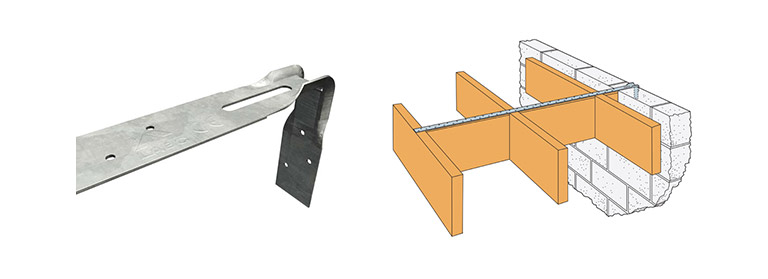
“In theory, the floor and ceiling joists of a house act as ties and hold the walls in position but the number of failures has proven that the walls do move away from the joists, especially where walls run parallel to the joists or where a staircase runs alongside a wall. The solution to the problem is the incorporation of metal restraint straps which ensure the walls, floors and roofs are secured together to prevent movement.”
At Speedy Fixings, we supply a large selection of restraint straps, from galvanised restraint straps to stainless steel restraint straps. Each material has its advantages and disadvantages, being better suited for different situations. So, what are the differences between galvanised steel restraint straps and stainless steel restraint straps?
Galvanised steel restraint straps.
Galvanised steel restraint straps are made of plain steel with a zinc coating. These restraint straps are ideal for applications in non-coastal areas. Whilst galvanised steel can withstand water exposure, it cannot withstand saltwater exposure and thus, should not be used in buildings near saltwater. Plus, as galvanised steel is a coating, if the coating is compromised, the steel underneath may start to rust.
In Building Adaptation, James Douglas explains that “galvanised steel risks failure by corrosion, particularly in damp or marine (i.e. salt-laden) climates. You should use stainless steel restraint straps for these environments instead.”
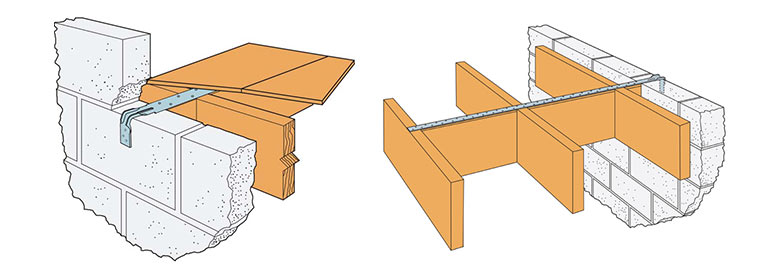
We supply both heavy-duty galvanised restraint straps and light-duty galvanised restraint straps. Galvanised heavy-duty straps are 30mm wide and 5mm thick whilst light-duty galvanised straps are 30 mm wide x 2.5 mm thick. Some of our best-selling galvanised restraint straps include 100mm galvanised light duty restraint strap and 400mm galvanised heavy-duty restraint strap.
Stainless steel restraint straps.
Stainless steel restraint straps are made from stainless steel, an alloy made of iron, carbon and chromium and, occasionally, other elements, which offers great corrosion resistance. There are various types of stainless steel available, including A2-304 stainless steel and A4-316 stainless steel.
Even though stainless steel is more expensive than galvanised steel, it lasts much longer and is much stronger than galvanised steel. Also, stainless steel does trump galvanised steel when it comes to saltwater resistance. However, stainless steel is quickly degraded when exposed to chlorinated water.
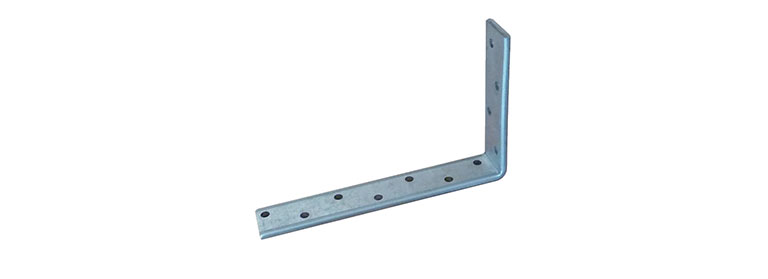
At Speedy Fixings, we supply stainless steel heavy duty restraint straps and stainless steel light duty restraint straps, which are available as A2-304 stainless steel. Our stainless heavy-duty straps are 28mm wide and 4mm thick while light-duty stainless steel straps are 30mm wide and 2.5mm thick. Popular sizes include 150mm stainless steel light duty restraint strap and 75mm stainless steel A2-304 light duty strap.
Overall, there are more benefits when using stainless steel. However, both stainless steel restraint straps and galvanised steel restraint straps will provide the necessary requirements to comply with the current building regulations. Our restraint straps are supplied in lengths up to 3 metres. If you require longer restraint straps, contact us today.