
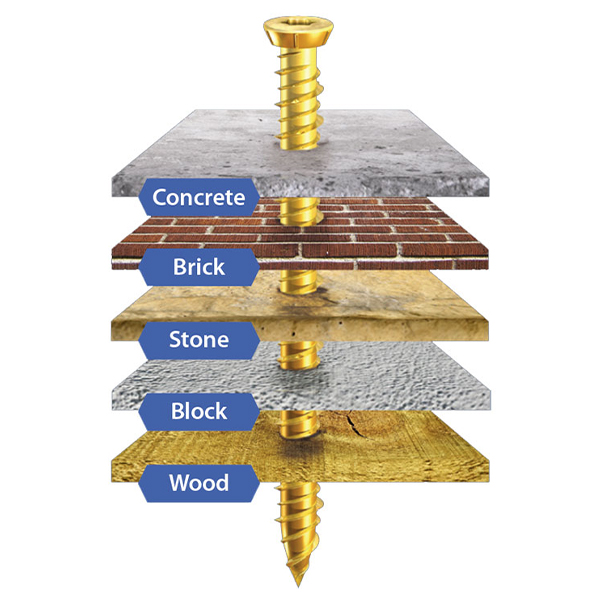
What materials can concrete screws be used in?
Concrete screws, also called masonry frame screws, are a light-duty fixing that are often assumed to be suitable for concrete only, but they’re also designed to work across several materials.
Our ZYP concrete screws are suitable for:
Dense Concrete
Ideal for poured and cured concrete. Concrete screws cut their own thread into the base material, providing strong, reliable holding without the need for a wall plug.
Solid brick
Works well in dense, solid bricks. Care should be taken to drill into the brick itself rather than the mortar joint for best performance.
Concrete block
Suitable for solid or dense block. Holding strength can vary depending on block density, so load requirements should always be considered.
Some natural stone
Concrete screws can be used in certain hard stones, provided the material is not brittle or prone to cracking. A test fixing is always recommended.
Wood
Concrete screws can be used for wood. This is most common when you need to connect wood to masonry material, where the screw passes through the wood and anchors into the masonry. They are generally not ideal as a primary wood-to-wood fastener.
Where concrete screws do not work well
Concrete screws are not recommended for:
- Soft or low-density masonry
- Crumbly or weak mortar joints
- Old or degraded substrates
- Wood-to-wood fastening
In these cases, the material may not provide enough resistance for the threads to bite properly, which can reduce holding strength or cause failure.
What are concrete bolts?
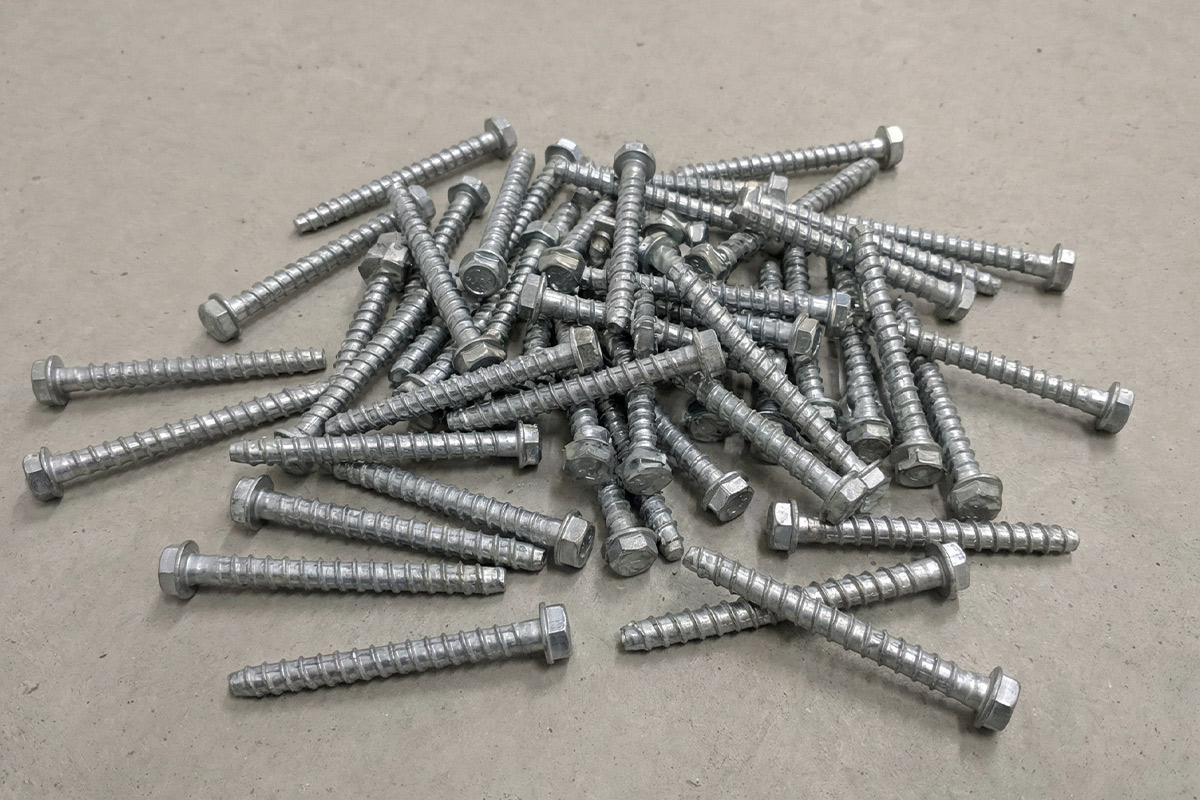
Concrete bolts are heavy-duty masonry fixings designed to provide a sturdy and secure anchor in solid base materials.
At Speedy Fixings, our range of concrete bolts includes:
- Anker bolts
- Socket bolts
These fixings are typically used where higher load capacity or structural security is required. They offer strong anchoring in concrete and other dense base materials, making them suitable for applications such as steelwork, frames, machinery, and permanent installations.
Concrete bolts are often chosen when:
- Higher loads are involved
- A more rigid fixing is required
- Long-term or structural performance is critical