
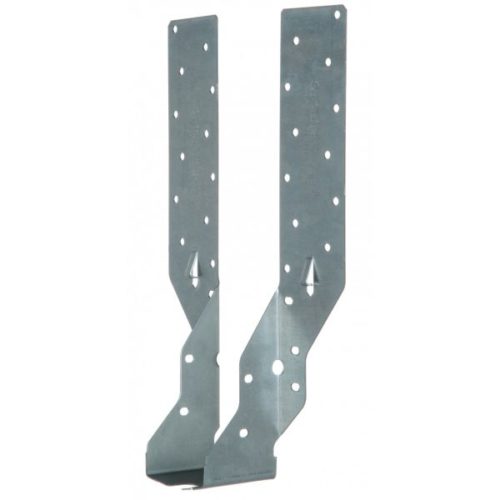
Understanding the Three Types of Wrap-Over Joist Hangers
When constructing a building or adding an extension to an existing one, it is important to ensure that the structural elements are securely held in place. One such element is the joist, which is a horizontal beam that supports the weight of the floor or ceiling above it. To attach joists to a supporting structure, joist hangers are used. In this blog, we will take a closer look at the three types of joist hangers offered by Speedy Fixings, a leading supplier of construction and building materials in the UK.
Joist hangers are metal brackets that are designed to attach joists to wood, concrete, or masonry. They are essential for ensuring that the joists are held securely in place and that the weight they bear is distributed evenly across the supporting structure. Using joist hangers also reduces the risk of structural failure caused by warping, splitting, or bowing of the joists over time. In this blog we will be taking a deeper look at the three types of wrap-over joist hangers.

What Are Wrap-Over Hangers?
Wrap-over hangers are the most used type of joist hanger. They are easy to install and provide a strong and secure connection between the joist and the supporting structure. These hangers are designed to be installed after the joist has been put in place, by wrapping around the top and sides of the joist and nailing or screwing them to the supporting structure. Wrap-over hangers are suitable for use in both interior and exterior applications and can be used with a wide range of joist sizes.
- The standard wrap-over hanger is one of the most common types of joist hangers used in construction projects. It is a versatile and reliable option that provides a secure connection between joists and supporting structures. The standard wrap-over hanger is designed to be easy to install and can be used in various applications, including timber, masonry, or concrete. Its simple design allows for quick and straightforward installation with standard nails or screws, ensuring that the hanger stays firmly in place.
- The Long Leg Wrap-Over Hanger is a variation of the standard hanger designed for situations where additional clearance is needed. Its longer legs provide extra support and are ideal for use with thicker materials, ensuring that the hanger stays firmly in place. The long legs of the hanger provide a greater contact area, which increases the hanger’s load-bearing capacity, making it an excellent choice for heavy-duty applications.
- The Extra Long Leg Wrap-Over Hanger is like the long leg hanger but features even longer legs for situations where maximum clearance is required. It is designed for use in areas with deep beams, high ceilings, or other scenarios where extra support is needed to ensure a secure and stable connection. The extra-long legs provide a more substantial contact area, which improves the hanger’s load-bearing capacity, making it an ideal choice for heavy loads or large beams. Overall, the extra-long leg wrap-over hanger is an excellent solution for applications that require additional clearance and maximum load-bearing capacity.
In conclusion, joist hangers are an essential component in any construction project involving joists. They provide a secure and durable connection between the joist and the supporting structure, reducing the risk of structural failure and ensuring the longevity of the building.
Speedy Fixings offers a range of joist hangers, including wrap-over hangers, face-fix hangers, built-in masonry hangers and truss clips, to suit a wide range of applications and load-bearing requirements. By selecting the appropriate hanger for the job, builders and contractors can ensure that their construction projects are safe, secure, and built to last. To see the full range of joist hangers, including the 3 mentioned above click here.
The most common form of fixing a wrap-over hanger is with Square Twist Nails. Care should be taken to use all the holes in the hanger to ensure maximum performance.