

How to choose the right drill bit
No single drill bit is suitable for all materials. Each bit is designed for specific surfaces. So, it is essential to choose the right drill bit for your project. To make the best possible choice, it is important to understand the basics of drill bit selection, including material, sizes and types.
Types of drill bits.
Drill bit types are related to the surface being drilled, from wood to masonry and metal. Start by choosing the correct type of drill bit, and then select the right material and size.
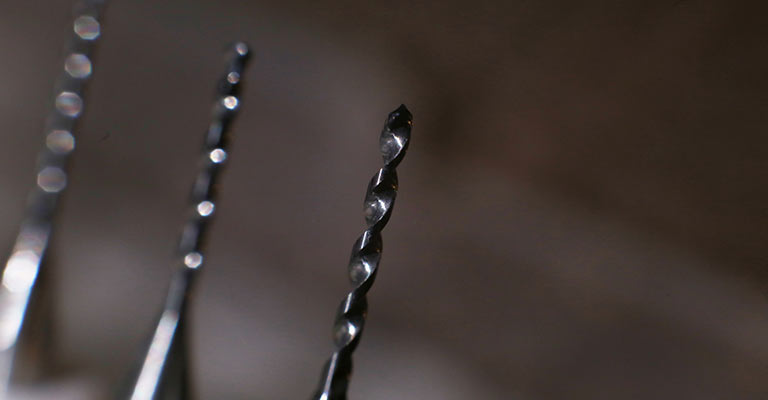
Wood Drill Bits.
Wood drill bits are versatile bits that are designed to drill through wood. Some work better for softwood varieties whilst others are ideal for hardwoods. We supply flat wood drill bits and wood auger drill bits in various sizes. So, if you are asking “what drill bit for wood?” – purchase a wood drill bit or a flat bit.
Steel Drill Bits.
To drill through metal materials, metal drill bits are essential. There is a wide range of drill bits for metal, including high speed steel drill bits, also known as HSS drill bits, such as HSS cobalt premium drill bits and HSS sprint jobber drill bits. These are long-lasting and durable metal drill bits. Cobalt bits are very hard wearing and ideal for drilling a variety of materials, including plastic, aluminium and stainless steel.
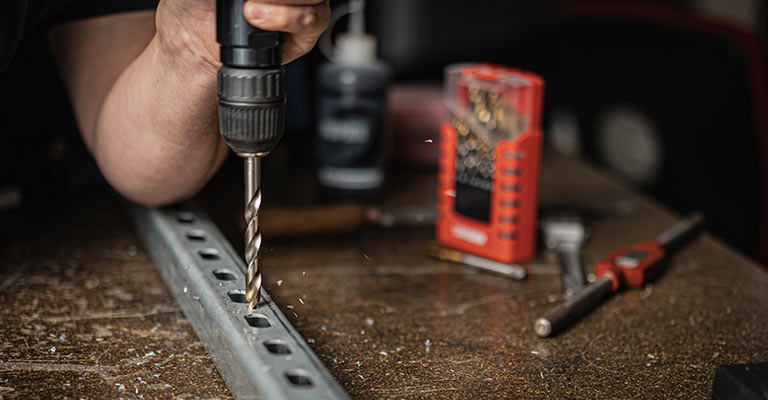
At Speedy Fixings, we also stock a variety of VersaDrive drill bits, including the Turbotip impact drill bit. VersaDrive bits are designed to be used with the HMT VersaDrive System, which is the first modular quick-change drilling and cutting system that can fit both rotary tools and impact tools.
Related: HMT VersaDrive System – Modular Cutting System.
Masonry Drill Bits.
Masonry drill bits are highly durable drill bits are designed to be used with concrete, natural stone and masonry. Some masonry drill bits are also suitable for drilling into tiles. We stock a large selection of masonry drill bits, including SDS Plus Drill Bits, SDS Plus F8 Extreme Drill Bits and SDS Max Drill Bits. Amongst this range, we supply 13mm drill bit, 4mm SDS+ drill bit, 50mm SDS max drill bit, 19mm SDS+ drill bit and more.
How to choose drill bit sizes.
The size of the drill bit will determine the size of the hole you will drill through the material. So, with this in mind, there are a few rules of thumb:
- When drilling softwoods use a bit 1/64” smaller than the desired hole size.
- When drilling other materials, use the exact size desired.
FAQ – Frequently asked questions.
Can masonry drill bits be used on metal?
To achieve the best results, we recommend using material-specific drill bits. So, if you want to drill through masonry, purchase a masonry drill bit or if you want to drill through metal, choose a metal drill bit.
How to measure drill bits?
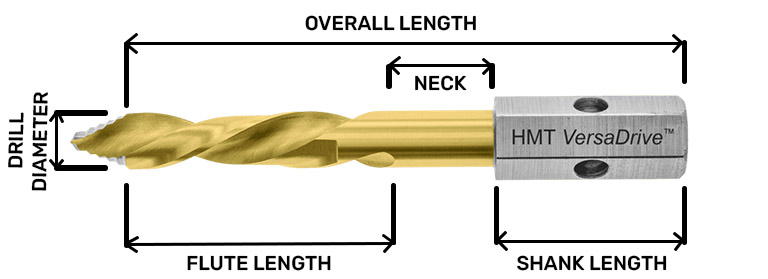
How to choose the right size drill bit for the screw?
If you know the size of the screw you want to use, you can locate the size of the drill bit by looking at the opposite end from the tip of the bit. The size of the drill bit will most likely be engraved there.
In case you are unsure of the size of the screw or the bit, you can hold the drill bit up directly on top of the screw. You want to choose a drill bit that is the exact size of the main body of the screw (not the thread!). If you hold the drill bit on top of the screw and you can see the thread but not the main body, you have the right size.
Alternatively, we recommend drilling a test hole to check the right size bit. Contact our team today if you require further advice. You can easily reach us on mobile at 01206 793100 or email at [email protected].